Science Communication
The Scrawny Little Garden Blueberries That Tasted Better Than the Store-Bought Ones
There is actually science behind why this can happen.
23 October, 2026
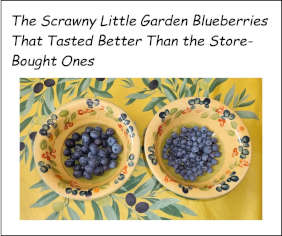
I planted a blueberry bush in my little garden a couple of years ago. It finally started bearing enough fruit for me to enjoy by the handful. On the plant, the berries looked wonderful: plump, healthy, and blue. But when I placed them right next to a bowl of store-bought blueberries, my garden berries actually looked pretty small and scrawny.
I took the side-by-side picture of the two blueberry batches during mid-summer. July and August are often when some of the richest-flavored varieties are on the market. Many of the popular blueberries are big and plump, and those are often what we find in the stores in Europe.
My garden berries come from a highbush variety (i.e. “breed”) called Bluecrop. It’s a popular variety for both private gardens and commercial farming. They tend to yield lots of big berries and are relatively disease resistant compared to other commercially available varieties.
What Does Disease Resistance Mean?
Disease resistance is a term used in plant epidemiology. Just like humans and other animals, plants also get sick. However, certain varieties (i.e. “breeds”) of crop plants tend to get sick less easily than other varieties. This ability to prevent or limit infection by disease-causing pathogens is called disease resistance. These variety-specific trends in disease susceptibility and resistance, even across the same species of plants, are usually due to the genetic composition of these plants.
Appearance Versus Taste: How the Garden and Store-Bought Berries Differed
After observing the size difference between my garden berries and the store-bought ones, one would have thought my berries came from some wild blueberry variety. But appearances don’t always tell us everything about a blueberry.
My garden berries tasted great. They were rich in flavor and sweet, although they were a bit tough-skinned.
The store-bought berries looked great. They weren’t tart but much more watered down in their flavor than their garden-grown counterparts. When I ate them right after my garden berries, the store-bought ones had an odd aftertaste, which wasn’t pleasant.
I also bought batches of blueberries weekly from supermarkets and weekly markets during the summer so that I wasn’t judging store-bought berries based on a single batch. But the result was the same. My garden berries tasted richer and sweeter.
Some Science Behind the Personal Experiences
Personal experiences are what people love to hear about, but they tend to be subjective. That’s why we scientists like to try to support observations with measurable evidence.
I didn’t find a research publication that compared garden berries with store-bought ones. However, some studies do contain relevant information that could help explain the differences in taste between the berries.
Does Harvesting Late Make the Berries Taste Better?
One obvious possible reason is time of harvest. I typically hand-pick the berries that are attached to browning woody stems and leave the ones still attached to fleshy stems. The berries attached to woody stems have been on the bush for at least a week, probably more, since they turned blue.
This delayed harvesting approach agrees with research that Josh Vander Weide from Michigan State University presented during a field day in 2024. The experiments he presented showed that delaying harvest didn’t increase the sugar concentration in the 3 commercial varieties of blueberries they tested (Duke, Draper, and Calypso). However, it did decrease the acidity in the fruits.
They also conducted consumer sensory studies, where people were asked to taste blueberries that had spent different amounts of time ripening on the branches. The results showed that the more harvest time was delayed, the more people liked the berries.
Drawbacks of Delaying Harvest Time
However, other studies like the one from the University of Georgia show that delaying harvest generally produces softer fruit that also have lower postharvest quality during storage. The proportion of damaged berries in the Georgia study was also higher in berries harvested late than in berries collected during standard harvest periods.
These types of studies are scientific evidence that typically backs commercial producers’ incentives to harvest the berries a little earlier rather than later. They want consumers to love their fruits, but they also need to make sure that the fruits arrive at the stores unharmed and unspoiled because consumers want picture-perfect foods.
Are Smaller Berries Higher Quality?
Another possible reason could be that smaller berries just simply pack in more punch, while bigger berries are just watery. But this assumption isn’t necessarily universally true.
For instance, a research study conducted in Israel grew the Biloxi southern highbush variety at either control temperatures (20 °C during the day and 16 °C during the night) or at experimental hot temperatures (30 °C during the day and 24 °C during the night). The scientists showed that growing these plants under hotter temperatures produced smaller berries that were less sweet.
An Article for the Average Gardener
Many internet guides and articles talk about how to grow blueberry plants the right way. Other professional articles present how terrible plants could look when diseases overtake them under optimal disease-forming conditions. But very few of these articles actually talk about what happens when we don’t do things just quite right. These middle-ground situations are often where most private gardeners stand. So, there needs to be more focus on providing these audiences with concrete science-driven knowledge outside communal Reddit threads.
Therefore…
My garden blueberry bush is probably not grown under optimal conditions, but I hadn’t managed to kill the plant outright either. The soil is probably either not acidic enough, low in iron, or both because leaf chlorosis often stresses the plant. I haven’t done much pruning, so the plant is probably not focusing enough energy on each and every one of its berries. Lack of pruning in apples often produces many small apples, and the trend is said to be similar in blueberries. Last summer was very hot and dry, which might not have helped the situation either.
But my little scrawny Bluecrop blueberries were still extremely tasty and full of flavor. The berries were harvested as late as possible after turning blue, which likely helped with the flavor. Fertilizing regularly, watering sufficiently, and mulching may also be the reason why the plant didn’t fail altogether.